


AI Security Certification Courses are becoming essential as artificial intelligence moves into everyday business systems. By 2026, over 90 percent of large organizations are expected to use AI in production, yet more than half of these systems still lack proper AI security controls. With AI security job demand growing rapidly and global spending crossing 40 billion dollars annually, professionals with the right certification are now in strong demand.
Companies in technology, finance, healthcare, and SaaS are now actively looking for professionals who understand how AI systems work and how they can fail. This shift has made AI security a career skill rather than a niche specialization. This article explains why AI security matters, who should learn it, salary expectations, career scope, and the most relevant certification courses available in 2026.
Why AI Security Skills Matter in 2026
AI systems do more than automate tasks. They analyze data, make decisions, and sometimes act without human review. This creates risks that traditional cybersecurity tools are not designed to handle.
For example, an AI model can be influenced by poisoned training data. A language model can be manipulated through inputs. A poorly governed AI system can expose sensitive information without triggering standard security alerts.
As AI adoption grows, organizations are realizing that protecting AI systems requires new skills. This is why AI security roles are growing faster than many traditional security positions.
Who Should Learn AI Security Certification Courses
AI security training is useful for people from different backgrounds, not only AI researchers.
These courses are well suited for:
- Cybersecurity professionals working with AI enabled systems
- Machine learning engineers and data scientists
- Compliance and risk management teams
- Product managers and technology leaders
- Developers building AI driven applications
Many AI security professionals started in general IT or cybersecurity roles and added AI knowledge later. The learning curve is manageable with the right certification.
How AI Security Differs From Traditional Cybersecurity
Traditional cybersecurity focuses on protecting systems that follow fixed rules. AI systems learn from data and adapt over time, which creates new types of weaknesses.
Key differences include:
- AI systems can be influenced without direct system access
- Security failures can affect automated decisions at scale
- Data quality and model behavior become security concerns
- Governance and oversight are as important as technical controls
This is why AI security certification courses combine technical concepts with risk management and governance.
Read Also: Will AI Replace Cyber Security Jobs?
What to Look for in a Good AI Security Certification
Before choosing a certification, consider the following:
- Does the course explain real world AI risks clearly
- Is the content practical and job focused
- Does it cover governance and compliance where needed
- Is the certification respected by employers
The right certification should improve both skills and credibility.
Best AI Security Certification Courses In 2026
Below are five relevant and current certifications, each focused on a different aspect of AI security.
1. Modern Security AI Security Certification
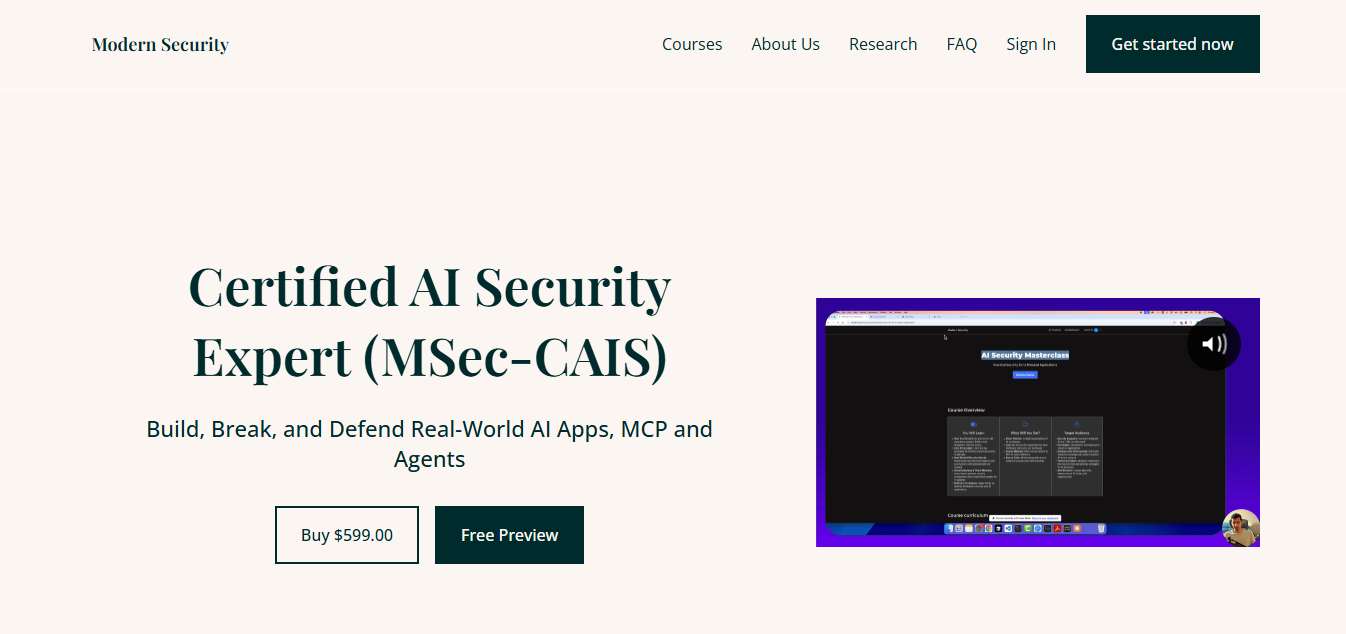
This course from Modern Security focuses on understanding how AI systems are built, how they are attacked, and how they can be secured in real environments.
Key details
- Course type: Online, self paced
- Price: Around 599 dollars
- Structure: 30 plus lessons with practical labs
- Focus areas: AI fundamentals, threat modeling, offensive techniques, defensive controls
Who Should Join
- Security engineers working with AI systems
- Developers deploying AI or LLM applications
- Technical professionals new to AI security
This course is beginner friendly and focuses on practical understanding rather than theory heavy content.
2. AI Governance Certification by Securiti
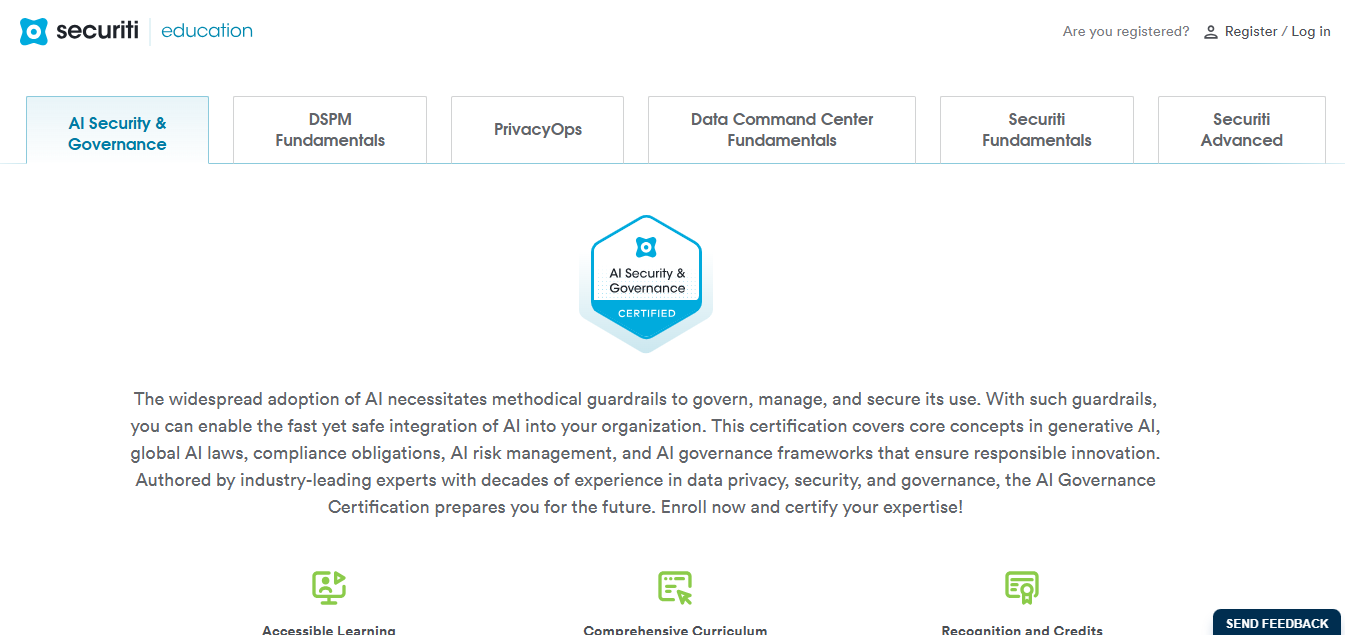
This certification focuses on governance, risk, and responsible use of AI rather than deep technical security.
Key details
- Course type: Online foundational certification
- Price: Free
- Duration: Short structured learning program
- Focus areas: AI risk management, governance frameworks, compliance concepts
Who Should Join
- Compliance and risk professionals
- Legal and policy teams
- Business leaders responsible for AI oversight
This course is well suited for those who need AI governance knowledge without a technical background.
3. Advanced in AI Security Management (AAISM)
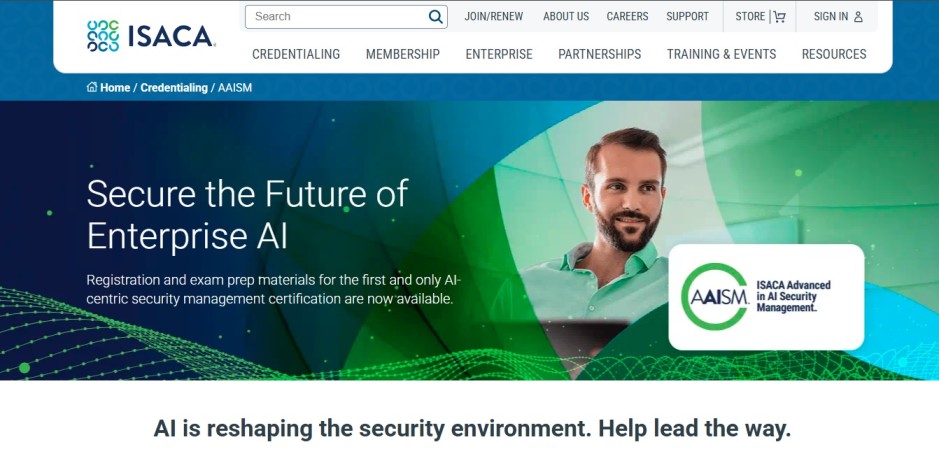
This certification is offered by ISACA and is designed for experienced security professionals.
Key details
- Certification type: Exam based credential
- Prerequisites: Existing CISM or CISSP certification
- Focus areas: AI governance, risk management, security program leadership
Who Should Join
- Senior security managers
- CISOs and security leaders
- Professionals managing enterprise AI risk
This is not an entry level certification and is best suited for experienced practitioners.
4. AI Security Compliance Certification by AI CERTs
This certification focuses on compliance, audit, and regulatory alignment in AI environments.
Key details
- Certification type: Online proctored exam
- Exam format: Multiple choice assessment
- Focus areas: Compliance frameworks, risk management, AI assisted compliance
Who Should Join
- Compliance and audit professionals
- Risk managers
- Security teams supporting regulatory requirements
This certification is useful for professionals working in regulated industries.
5. Certified Security Professional in Artificial Intelligence (CSPAI)
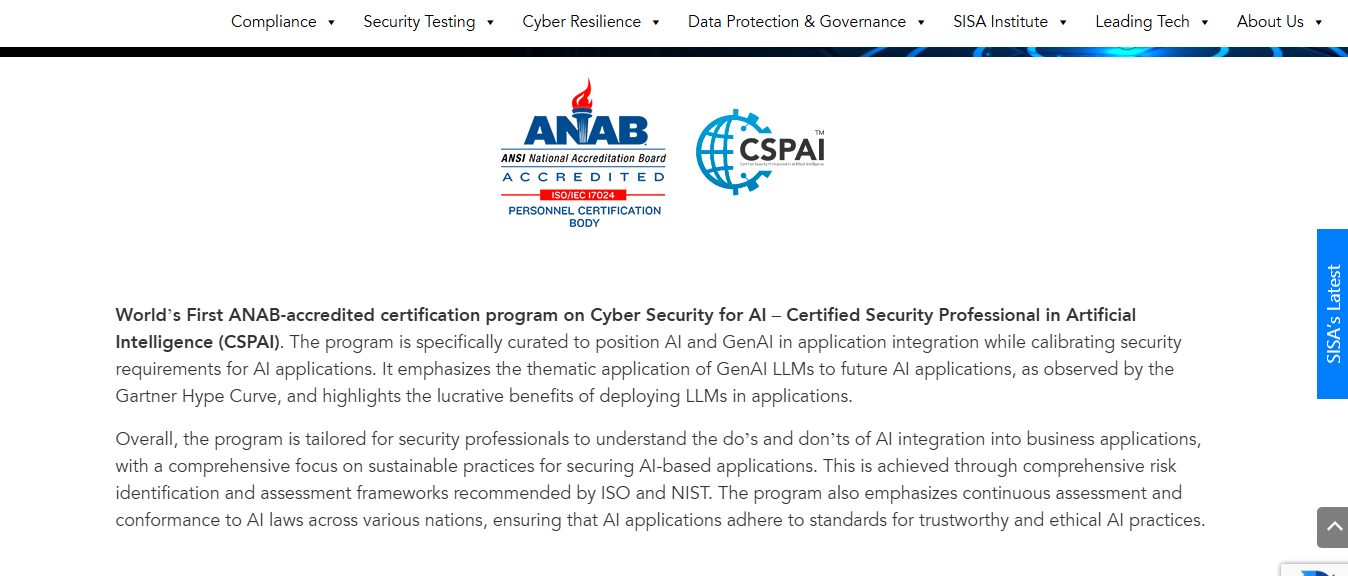
This certification is designed to validate skills related to securing AI systems across their lifecycle.
Key details
- Certification type: Professional training with assessment
- Delivery: Instructor led sessions
- Focus areas: AI security challenges, data protection, governance strategy
Who Should Join
- Security architects and engineers
- Professionals responsible for AI implementation
- Teams securing enterprise AI platforms
This certification is aimed at practitioners looking for structured, professional training.
Salary Outlook for AI Security Professionals
AI security roles are among the higher paying positions within cybersecurity.
Typical salary ranges include:
- Entry level roles earning around 95,000 to 120,000 dollars per year
- Mid level professionals earning between 140,000 and 170,000 dollars
- Senior AI security leaders earning above 190,000 dollars annually
These salaries reflect the shortage of professionals with both AI and security knowledge.
Career Scope After Certification
After completing AI Security Certification Courses, professionals often move into roles such as:
- AI Security Engineer
- Secure AI Architect
- AI Risk and Compliance Specialist
- AI Governance Lead
These roles are now common across technology companies, financial institutions, healthcare providers, and enterprise organizations.
Build Practical Skills for Securing Real AI Systems
If your goal is to understand how AI systems fail and how organizations protect them in practice, Modern Security’s AI Security Certification offers a clear and practical learning path. It focuses on real threats, real controls, and real use cases rather than abstract theory.
Read Also: How Generative AI Has Affected Security
Conclusion
AI security is no longer optional. As organizations rely more on AI for decision making and automation, the need for trained professionals continues to grow.
AI Security Certification Courses help professionals stay relevant, increase earning potential, and build trust with employers. With the right certification, even those new to AI can enter this field and develop a strong, future focused career.





Leave a Reply